Why Do Some Objects Stay With Us?
We live surrounded by options. Buying accessories has never been easier. However, some pieces end up becoming part of our lives for years, while others quickly fade from our memory.
What makes an object stay with us? Is it a matter of utility, aesthetics, or is there something more?
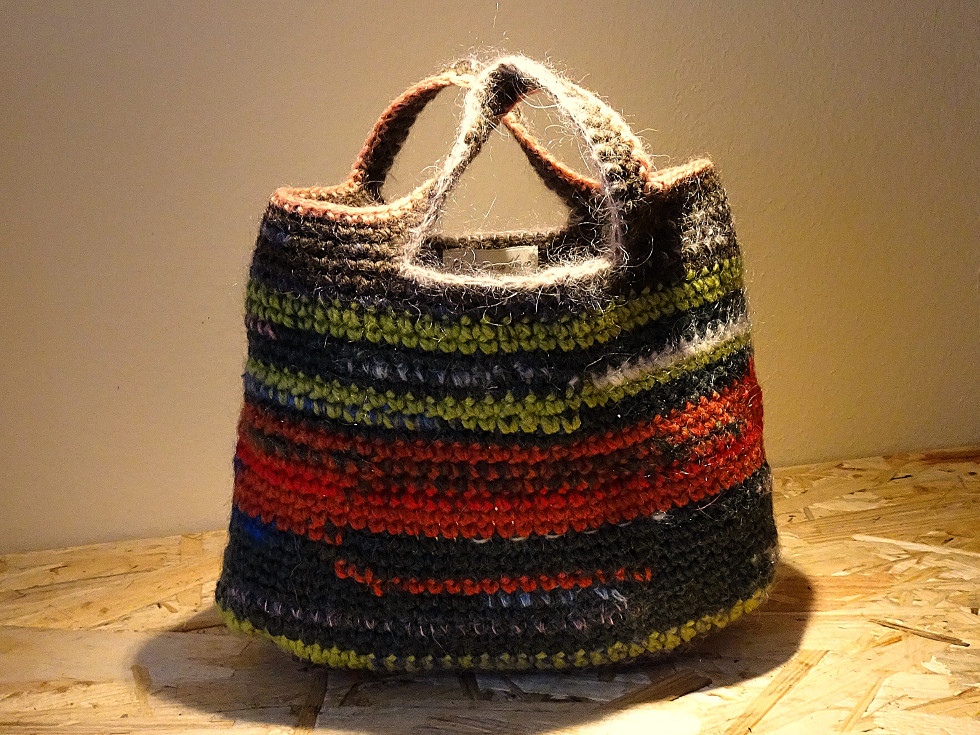
When Something Wasn't Born to Be a Product
Crochet was one of the first knitting techniques I learned when I was very young. Making granny squares was fun: colors, simple repetition, and play.
Today, crochet continues to be a way for me to return to a calmer state, to work with my hands, and to touch fibers from different origins.
Throughout my work, I've accumulated scraps of materials from various projects. These are fibers I don't want to throw away: they have texture, character, and their own beauty.
One day, while organizing these scraps, I began to join them almost unintentionally. Without a sketch, without a pattern, without a clear idea. Simply playing.
And from that gesture, the first bags were born.
There was no prior design. No objective.
Just exploration.
A collection born from play.
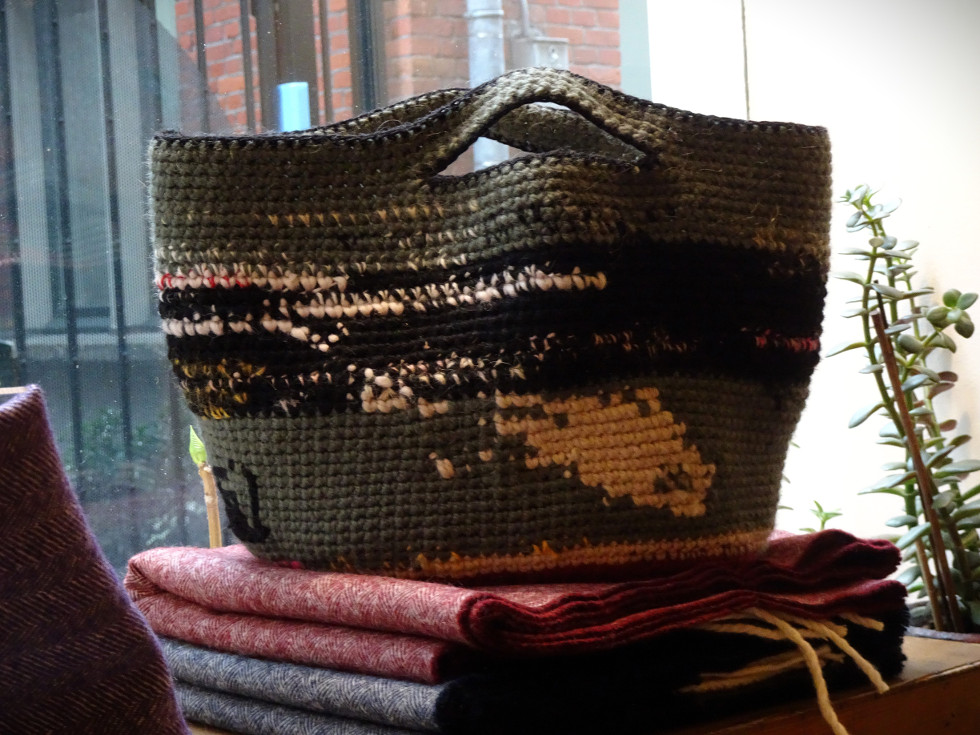
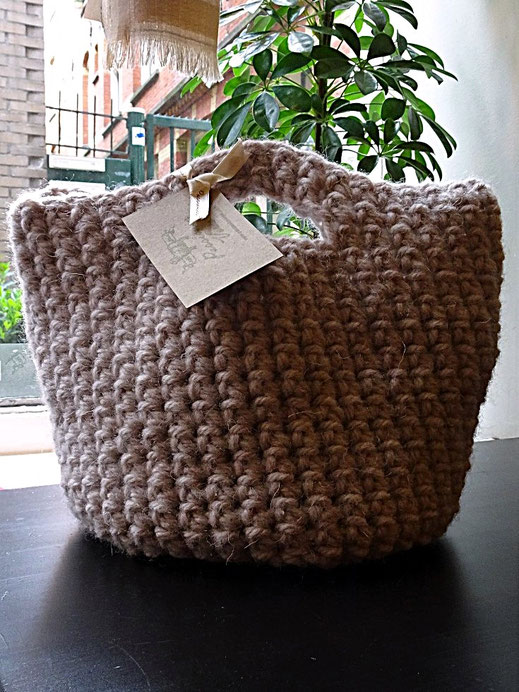
That initial impulse, many years ago, gave rise to several different bags. Each with its own shape, color combination, and personality.
They weren't conceived as products, but as objects that complemented the studio, adding texture and presence to the space.
Later, they began to appear in photo shoots, window displays, and the visual universe of my work.
And little by little, without seeking it, the first reactions also emerged.

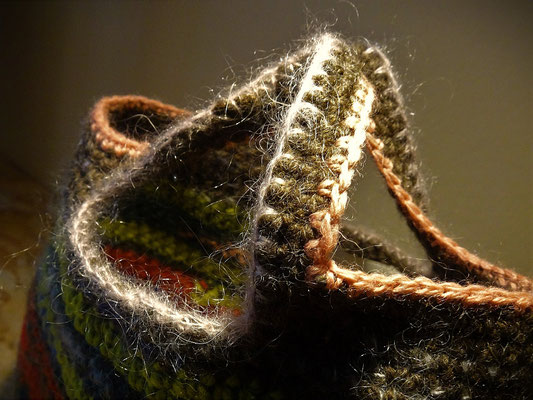
Different perspectives on the same object.
For some close friends, these pieces didn't fit what would be considered "appropriate" to display or sell.
However, the response from others was completely different.
Clients, artists, and people with a more open sensibility began to notice them, appreciate them, and, in some cases, acquire them.
Even people who have been knitting for years didn't always connect with these pieces, while others, with no direct connection to the world of knitting, did immediately.
This led me to a question:
How is it possible that the same object can generate such different interpretations?
Beyond Technique
That experience showed me something important:
The value of a handcrafted piece doesn't lie solely in its technical complexity.
There's also something more difficult to define:
personality
intention
character
emotion
These are elements that aren't always immediately apparent, but they determine our connection with an object.
The Role of Accessories in a Contemporary Wardrobe
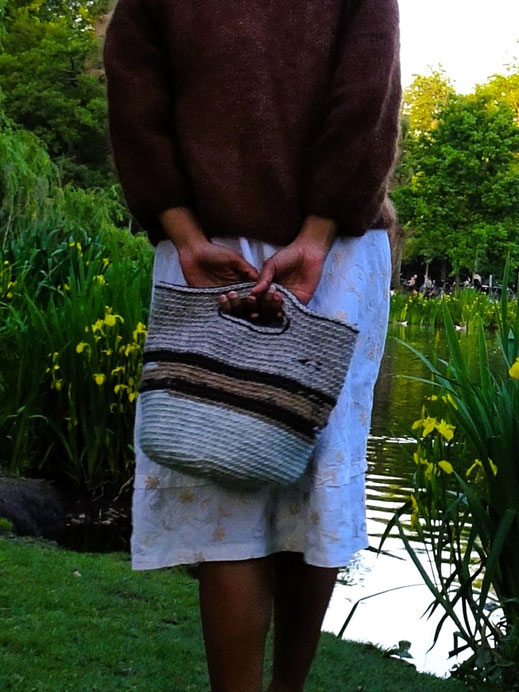
In an era where we tend to simplify our wardrobes and choose more intentionally, accessories play a special role.
A handcrafted bag can add:
texture
individuality
history
warmth
And it can be integrated naturally into different contexts:
Jeans.
A linen shirt.
A simple set of neutral tones.
Or even more carefully curated combinations for special occasions.
The key isn't in the isolated object, but in how it interacts with the rest.
Objects that tell stories
I believe the key lies in the relationship we establish with the objects we choose to accompany us.
When a piece connects with us, it's not just because of its form or function, but because of something deeper: a feeling, a presence, a story.
And perhaps that's why handcrafted accessories continue to have a place in a contemporary wardrobe.
Not because they are necessarily unique.
But because they help us build a more personal relationship with what we use every day.
Closing
Sometimes, what begins unintentionally ends up finding its own way.
And what started as a game with leftover materials has gradually become, over time, small pieces that travel, accompany, and interact with different people in different places.